Director Of Gallery IMA
Gives his Advice on Buying a Painting at an Art Gallery
1. What steps would you recommend a person take who wants to start their own collection of paintings?
"Define what you like and your interest
Even More Reasons to Buy Tickets for the
Halloween Boogie Monster Dance
You probably thought we were already outdoing ourselves by not just hosting a Hip-Hop Dance with every popular DJ in the city and featuring the only dance in town with a Necromorph Exhibit—but we solemnly swore an oath to “leave no member behind” on Halloween so we also want to announce that Mark Mitchell will MC and manage the Costume Contest (where there will be cash and other prizes) and if that isn’t enough: Archana Kumar will be giving a special performance in the discipline of Kathak Dance.
Halloween is just about here and Seattle CoCA is putting on a showing fitting for the holiday: The Necromorph Exhibit, running October 4 – November 1, 2007 and curated by Rachelle Taylor.
Margot ponders my question and responds: “Christianity was central to the debate on federal funding for embryonic research . . . I looked at religious paintings . . . and tried to find places where the Christian story melted into the current story. People were articulating a cultural divide and I was trying to find places where art could confuse the divide and make space for thinking.”
(Dock Triptych was sponsored in part by a 2005 GAP Grant by Artist Trust.)

What if you just bought a beautiful painting and need to ship it to your home or to someone as a gift—what do you do?
Paintings are fragile and need to be secured from shocks, damage from being too loosely secured in the packaging, temperature, rain, and other hazards. Although there is a risk of theft, the greater risk actually comes from damage, so good packaging is key.
If the painting has to travel a long distance you might want to hire a company which dedicates itself to shipping and packaging art. For one thing, they are highly aware of weather issues and therefore take more care in the initial packing process to keep your painting undamaged. Temperature is monitored in specially outfitted trucks and the staff is trained to handle art.
Insurance might be needed too. Fees will be determined by the distance traveled and the overall value. Before shelling out extra for this you should check your homeowner’s policy first. Although you can buy insurance from the trucking company, this often is more expensive. Some events are excluded from claims, for example not only when floods or other “acts of nature” occur but also when your packaging breaks apart in transit. You might want to have the trucking company pack instead.
For proof of value you will need: receipts, sales records, and your own photos. Most people insure for the amount of purchase. If you are shipping an older painting you bought years ago, you may need fresh written estimates from professional appraisers. Carefully document the manner in which the painting has been packed and transported.
Just like the regular mail, if you want something done faster, you will have to pay extra for it, so you’ll have to weigh how quickly it needs to be delivered. Rates are higher for rush deliveries.
Is insurance worth it? The liability of transportation companies is limited, so you have to determine whether the extra cost is merited. Rates are normally $5.00 to $7.50 per $1,000.00 of value for full replacement. Most people decide this question based on price: If a painting is over a certain amount, like $10,000.00, or is a family heirloom or has other sentimental value, etc. Whatever criterion makes sense to you. Remember that most claims are for damage, not theft.
What if you get the painting home but can’t hang it right away? Store your painting in a reasonably cool and dry location and keep it shielded from light and you should be fine.
Should you frame at all? There are actually quite a few factors which come into play as you consider how you want to deal with your newly purchased painting.
First gather information about which materials the artist used to create the painting. If this is not listed in the program verify with the artist what types of paints and painting surface they used: Paints typically are oil-based, acrylic, watercolors, or ink; surfaces are often canvas or paper--keep in mind there are several grades and levels of quality for each of these.
Since you are going to want your painting to hang on the wall for many years to come you will want to take those actions which are going to help preserve the work. What do you do?
Does your painting need stretching? Stretching is considered a separate function from framing and you will want the artwork taut so it can be framed and displayed properly. Framers may not want to deal with a painting not properly stretched first. Will you need backing? What type of framing?
For an oil painting, as long as it is securely fastened to a stretcher, it might be fine without a frame. Contemporary paintings often use what is called a “floater” frame. This means the sides will still be visible after completion. Be careful here to attach this frame in such a way that you won’t damage the painting upon removing it later.
Is backing necessary? There are several types of acid free foam or corrugated board available and some recommend you cut holes in them first in order to facilitate having the painting breathe. If the painting surface is resilient, like canvas, you may not want backing. This is again where proper stretching becomes important.
Will you need protection from light—a common source of damage? Watercolors are especially sensitive and you can choose to shield your artwork with either glass or plexi-glass.
Want to put the frame together yourself? You will save money by buying a “do it yourself framing kit” from the web or by dropping into one of your local “do it yourself framing stores” (where you might also get helpful advice from the clerk or proprietor). Of course, if you feel insecure about doing everything yourself you can find professionals to help you. If your painting was expensive, this might be a wise choice.
Another consideration for framing: Did the artist paint right to the edge of the canvas, use a 3-dimensional setup (where the painting continues right to the wall edge as part of a box-like configuration which stands out from the wall) or did they leave unpainted canvas along the edges?
How do I pick a frame that looks right? Make sure the color of the frame enhances or compliments the colors used in the painting itself. Whether you choose a wood frame or metal frame or no frame also depends on the art itself. Does a frame with thick edges overshadow the effect of the painting?
When preparing to hang a painting, holes should be drilled around 25% down when measured from the top. The wire should be measured for the width of the canvas plus 6-8 inches and needs to be thick enough to bear the weight of the painting.
Helpful Resource: "The Artist’s Handbook," by Ralph Mayer
Framing tips at
http://painting.about.com/od/paintingtipsforartists/l/blframecanvastip.htm
STUDIO FOR RENT
Available November 1, 2007
Private workspace in all-artist SODO building.
822 Sq. ft. - (2 Rooms)
Larger Main Room (554 sf), and smaller back room (268 sf)
Large Skylight and ventilation
Parking
Lower Ceilings - 6 1/2' - 7'
No Live-In
$595 per month - Single Occupancy; fee for additional tenant
Includes all utilities and WI-FI
$10 annual common supplies fee
Shared common area maintenance
Currently in use as an oil painters studio, but could adapt well to other media. Unique configuration, very private and secure.
Contact Deborah Lawrence 206 768 8631 or deedeeart@comcast.net
OR Les Sterling 206 366 5644Here are some questions you can use to help you evaluate and understand a painting.
If you want to prepare yourself to sound sophisticated at the CoCA Painting Marathon and Auction coming up in November, here are a few timely tips for the neophyte to give you some background about paintings generally.

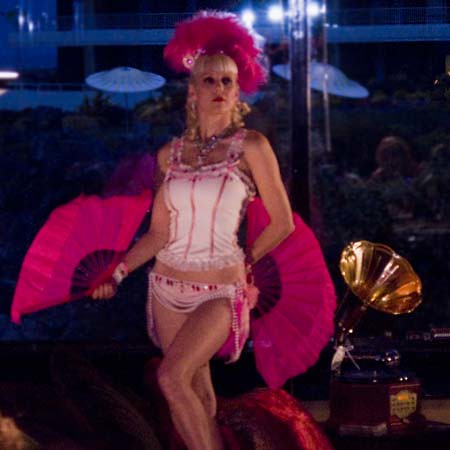
Because. .“Ernie is the perfect conduit to loosen up an uptight crowd,” said the man himself.
How did you come up with the name, "Ernie Von Schmaltz"?
“The name Ernie came about because of my female alter ego (Ernie's cousin) who also performs, Elsa. Elsa was the first to take the burlesque stage back in Nov. 2004. Ernie started performing later in spring of 2005. I wanted to have some sort of link between them in addition to sharing the "Von Schmaltz" name."
You use 2 alter egos?
Yes . . . “Elsa and Ernie never share a stage...Elsa has her own stuff and Ernie has his.”
Who is behind the stage group you perform with?
“The Von Foxies are a burlesque troupe- we are made up of 3 (really 4) members- Pidgeon Von Tramp, Heidi Von Haught, Ernie and Elsa Von Schmaltz.”
What are your performances like?
“We do mostly comedic burlesque- lots of bait and switch, making fun of pop culture, being really visually inventive. I would say those things are among the primary reasons we won the Miss Exotic World Best Troupe 2007 title.”
Congratulations on your success!
For more information on where the Von Foxies perform, visit: www.vonfoxies.com
Age: 21 and over
Dress: Theme
Scene: Clubber, Hipster/Stylish, Networking + Necromorph Exhibit
Now is the time and this is the event for those of you who have yet to quench your desire to own a quality painting collection and are salivating for perhaps the best chance you have left in Seattle this year to start one. The auction provides an ideal opportunity and you will be able to choose between established reputable artists as well as promising newcomers. An added benefit is that proceeds benefit CoCA and its work on behalf of contemporary art.
Do take stock of yourself first: what is the reason you are buying? Is it to please others or yourself? If you like what you bid on, whatever you pay for it makes it worth it to you then, doesn't it? Set your own limit. You make the decision, not anybody else. As long as the painting says something to you, you are on solid ground.
Art is personal. It is an individual statement and that is all that matters.
Want to know more about other important aspects of art collecting? Good, as we will run a series of blog posts giving further tips about buying a painting at auction. See you next time.

How did you like modeling at CoCA? I also noticed the production crew from Venus Flytrap Productions was filming you for a documentary, congratulations!
So I understand you won the “Best 2 Minute Drawing” Contest as judged by the MC, “Ernie Von Schmaltz”. What was your prize?Photo of James Greer by Chris Blakeley, visit his website at:
2010 Annual: Memory Upgrade
December 2, 2010 - January 1, 2011
CoCA Pioneer Square presents Memory Upgrade, a juried exhibition featuring work from 16 emerging as well as established artists in a wide variety of visual media, including 2d, 3d, and video.
A Latin American View -- Curated by Joseph C. Roberts.
Bombs and Spears -- Titillating Distractions During Times of War