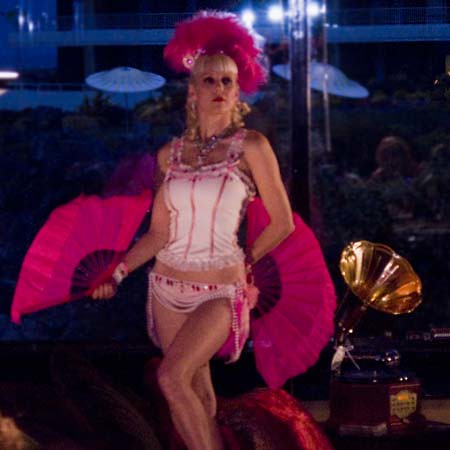
Wednesday, October 17, 2007

Buying a Painting at a Gallery

Dino Martini, former President of CoCA and
Director Of Gallery IMA
Gives his Advice on Buying a Painting at an Art Gallery

1. What steps would you recommend a person take who wants to start their own collection of paintings?

"Well, just start buying! Purchase because you like it, purchase because it evokes something within you. Art is very personal--don't be shy or compromise your own preferences for what you like because of others."

2. Do most galleries (like yours) mainly focus on a single theme, or do they usually rotate the styles, topics, etc., at different times?

"I guess if any gallery had a single theme, it would be allowing your artists to express themselves. Exhibitions change and can have various concepts or themes, especially when using outside guest curators. They usually explore and express a part of each artists' life, whether in a solo or group exhibition. All serious galleries have a certain style they represent, such as Abstract, Realism, Impressionism, Pop, etc."

3. How do you choose which artists to carry?

"Choosing which artists to represent hinges on quite a few factors. I guess in short, you need to believe in what they are doing and make sure you are behind them for support. It's often a long term relationship that needs to be fruitful on both ends."

4. How do you recommend novice buyers get the most out of your expertise at the gallery?

"I would say to attend exhibition openings, get on the mailing lists and do a little research on the gallery and the artists."

5. What would you say are the top 3 pieces of advice you can give prospective buyers who visit your gallery or any gallery for that matter?

"Define what you like and your interest
Research the artists and galleries
Get out your checkbook!"

Thanks for your help, Mr. Martini!

Halloween Dance Special Announcement

Even More Reasons to Buy Tickets for the

Halloween Boogie Monster Dance

You probably thought we were already outdoing ourselves by not just hosting a Hip-Hop Dance with every popular DJ in the city and featuring the only dance in town with a Necromorph Exhibit—but we solemnly swore an oath to “leave no member behind” on Halloween so we also want to announce that Mark Mitchell will MC and manage the Costume Contest (where there will be cash and other prizes) and if that isn’t enough: Archana Kumar will be giving a special performance in the discipline of Kathak Dance.

Archana formed the Manasarovar Kathak School in Seattle in 2003 and teaches at her own studio and gives classes and lecture demos at several colleges and schools.

To Archana, dance is “a dynamic expression” of our “conscious, subconscious, and unconscious mind.” The name “Kathak” literally means “story” and was started in Northern India as an art form for entertaining the public combining Sanskrit Poetic Literature and this special dance style.

Kathak Dance is characterized by its “unique movement quality.” Archana often blends her Indian classical art with modern dance moves and this creates an “international dance aesthetic infusing different art forms of various ethnic origins.”

For more information please scroll down to the post from October 6th on the Boogie Monster Dance.

http://www.archanakathak.com/default.html


Margot Quan Knight on her Necromorph Exhibit

Margot Quan Knight Knows Necromorph


Halloween is just about here and Seattle CoCA is putting on a showing fitting for the holiday: The Necromorph Exhibit, running October 4 – November 1, 2007 and curated by Rachelle Taylor.

Exhibiting her arresting images for us, Margot Quan Knight’s photos have an eerie, almost otherworldly quality to them. For example, her “Dirt Baby” photo and the “Dock Triptych” (part of her Procreation series) yanked my attention so severely I felt immediately compelled to stare into the stark reality of the rhythms of life.

“I am guessing there is a hint (at least) of a message to society in your photographs--am I misinterpreting this?”

“River is from a series I made in 2003 called ‘Taking Care,’” Margot says, “which is less of a message-to-society and more about looking inwards to make visible an emotional reality that I was experiencing.”

“Your ‘Dirt Baby photo--how did you craft the image? What significance does it have?”

Margot: “I rode my bike to Toys R Us, bought the most appealing baby doll, sanded down its plastic hair, covered it in clay, rolled it in dirt, and photographed it in the garden at my parents’ house. . . . I turned to the oldest 7-day story I could think of, Genesis. I was also realizing that I had reached child-bearing age, and some of my anxiety about that might have come out in Dirt Baby. ”

“Although I realize each person will react to your photos in their own way, is there a methodology behind your photos, a communication you are making? What concepts or methods are you using to encourage viewers to think?”

“At the time," Margot says, "I was thinking about the Procreation series, our President was vetoing funding for stem cell research [and] articles about “religion vs. science” kept cropping up in the NY Times, the Vatican sponsored an ad campaign against in-vitro fertilization in Italy, and I had my own paranoia about childbearing, so these things glommed together and became a subject. I took what mattered to me personally at that time, plus some connection to the world, plus a lot of reading at the library, and learning some art history. That was the method in the case of Procreation. It turned into a re-telling of the story of the birth of Christ within the context of stem cell research: Mary becomes a scientist, the immortal child is an immortal stem cell line, and things spiral out from there. I based my photos on the structure of medieval and renaissance religious paintings, which were designed to communicate to illiterate viewers, so the stiff directness of that style comes through in the photos.”

“How are you using religious symbolism? Can you tell us what role this plays in your work?”

Margot ponders my question and responds: “Christianity was central to the debate on federal funding for embryonic research . . . I looked at religious paintings . . . and tried to find places where the Christian story melted into the current story. People were articulating a cultural divide and I was trying to find places where art could confuse the divide and make space for thinking.”

(Dock Triptych was sponsored in part by a 2005 GAP Grant by Artist Trust.)

For more images from Margot, click on her link below.

www.margotknight.com

Necromorph Exhibit--Darin Shuler


Darin Schuler's Necromorph
is a Narwhal named Werewhal

Rachelle Taylor found Darin Schuler through the Artist Trust
website,
www.artisttrust.org, where he had recently won a GAP
(Grant for Artist Projects) Award and asked him to submit a piece for the show.
His watercolor and ink creation is named “Werewhal” and features
a Narwhal—which in real life is a whale with a 10 ft long tusk
sticking out the front and which actually exists, believe it or not!

“What is the inspiration behind including the Narwhal image?”

"Narwhals are in most of my work right now just because they are one of the most fantastical real animals on the planet. A good chunk of people don't even know they exist. They are sometimes call the 'Unicorn of the sea,' and I think that's cool. So, to make a person turn into a Narwhal was my way of playing with the Werewolf idea. They are both mythical creatures, I wish they were real," Darin says.

So I asked Darin: "What is he doing in the middle? Why is everyone looking at him?"

He said he wanted to tell a "really good story with a tattered note stabbed to the top of a tree trunk, the beasties from hell, and the spooky twin birds that might be ghosts or frozen or soaked in blue moon light. The only part of the story that I am sure of is that there is a man morphing into a Narwhal. The rest is interpretive."

"How exactly are you using colors in your work?"

"I was just thinking about spooky Halloween coloring. You know, on a freaky fall night the clouds might be green instead of gray. All the colors just fell into place," Darin says.

"Was this piece composed specifically for the Necromorph exhibit?"

"Yeah," Darin says, "Rachelle asked me if I would want to create something for the show and we both love Halloween so I though it would be fun. When someone sees this piece I hope they feel the need to create a story for it, or maybe think about how Narwhals are similar to Werewolves, and mostly I want that person to feel a powerful sense of terror."

Find more of Darin's work at:


www.darinshuler.com/home.html


Tuesday, October 16, 2007

Shipping paintings, etc.

Shipping, Insurance, and Storage

What if you just bought a beautiful painting and need to ship it to your home or to someone as a gift—what do you do?

Paintings are fragile and need to be secured from shocks, damage from being too loosely secured in the packaging, temperature, rain, and other hazards. Although there is a risk of theft, the greater risk actually comes from damage, so good packaging is key.

If the painting has to travel a long distance you might want to hire a company which dedicates itself to shipping and packaging art. For one thing, they are highly aware of weather issues and therefore take more care in the initial packing process to keep your painting undamaged. Temperature is monitored in specially outfitted trucks and the staff is trained to handle art.

Insurance might be needed too. Fees will be determined by the distance traveled and the overall value. Before shelling out extra for this you should check your homeowner’s policy first. Although you can buy insurance from the trucking company, this often is more expensive. Some events are excluded from claims, for example not only when floods or other “acts of nature” occur but also when your packaging breaks apart in transit. You might want to have the trucking company pack instead.

For proof of value you will need: receipts, sales records, and your own photos. Most people insure for the amount of purchase. If you are shipping an older painting you bought years ago, you may need fresh written estimates from professional appraisers. Carefully document the manner in which the painting has been packed and transported.

Just like the regular mail, if you want something done faster, you will have to pay extra for it, so you’ll have to weigh how quickly it needs to be delivered. Rates are higher for rush deliveries.

Is insurance worth it? The liability of transportation companies is limited, so you have to determine whether the extra cost is merited. Rates are normally $5.00 to $7.50 per $1,000.00 of value for full replacement. Most people decide this question based on price: If a painting is over a certain amount, like $10,000.00, or is a family heirloom or has other sentimental value, etc. Whatever criterion makes sense to you. Remember that most claims are for damage, not theft.

What if you get the painting home but can’t hang it right away? Store your painting in a reasonably cool and dry location and keep it shielded from light and you should be fine.


Painting Marathon Advice: Framing and Mounting

Considerations for Framing,
Mounting and Hanging a Painting

Should you frame at all? There are actually quite a few factors which come into play as you consider how you want to deal with your newly purchased painting.

First gather information about which materials the artist used to create the painting. If this is not listed in the program verify with the artist what types of paints and painting surface they used: Paints typically are oil-based, acrylic, watercolors, or ink; surfaces are often canvas or paper--keep in mind there are several grades and levels of quality for each of these.

Since you are going to want your painting to hang on the wall for many years to come you will want to take those actions which are going to help preserve the work. What do you do?

Does your painting need stretching? Stretching is considered a separate function from framing and you will want the artwork taut so it can be framed and displayed properly. Framers may not want to deal with a painting not properly stretched first. Will you need backing? What type of framing?

For an oil painting, as long as it is securely fastened to a stretcher, it might be fine without a frame. Contemporary paintings often use what is called a “floater” frame. This means the sides will still be visible after completion. Be careful here to attach this frame in such a way that you won’t damage the painting upon removing it later.

Is backing necessary? There are several types of acid free foam or corrugated board available and some recommend you cut holes in them first in order to facilitate having the painting breathe. If the painting surface is resilient, like canvas, you may not want backing. This is again where proper stretching becomes important.

Will you need protection from light—a common source of damage? Watercolors are especially sensitive and you can choose to shield your artwork with either glass or plexi-glass.

Want to put the frame together yourself? You will save money by buying a “do it yourself framing kit” from the web or by dropping into one of your local “do it yourself framing stores” (where you might also get helpful advice from the clerk or proprietor). Of course, if you feel insecure about doing everything yourself you can find professionals to help you. If your painting was expensive, this might be a wise choice.

Another consideration for framing: Did the artist paint right to the edge of the canvas, use a 3-dimensional setup (where the painting continues right to the wall edge as part of a box-like configuration which stands out from the wall) or did they leave unpainted canvas along the edges?

How do I pick a frame that looks right? Make sure the color of the frame enhances or compliments the colors used in the painting itself. Whether you choose a wood frame or metal frame or no frame also depends on the art itself. Does a frame with thick edges overshadow the effect of the painting?

When preparing to hang a painting, holes should be drilled around 25% down when measured from the top. The wire should be measured for the width of the canvas plus 6-8 inches and needs to be thick enough to bear the weight of the painting.

Helpful Resource: "The Artist’s Handbook," by Ralph Mayer

Framing tips at

http://painting.about.com/od/paintingtipsforartists/l/blframecanvastip.htm


Thursday, October 11, 2007

Studio for rent

STUDIO FOR RENT

Available November 1, 2007

Private workspace in all-artist SODO building.

822 Sq. ft. - (2 Rooms)

Larger Main Room (554 sf), and smaller back room (268 sf)

Large Skylight and ventilation

Parking

Lower Ceilings - 6 1/2' - 7'

No Live-In

$595 per month - Single Occupancy; fee for additional tenant

Includes all utilities and WI-FI

$10 annual common supplies fee

Shared common area maintenance

Currently in use as an oil painters studio, but could adapt well to other media. Unique configuration, very private and secure.

Contact Deborah Lawrence 206 768 8631 or deedeeart@comcast.net

OR Les Sterling 206 366 5644

Even more on the Painting Marathon

How to Read a Painting, Part 2

Here are some questions you can use to help you evaluate and understand a painting.

  1. Is the painting representational or abstract?
  2. Can you tell at a glance what the subject of the painting is? (Most likely the painting will be representational in this case.)
    1. What kinds of objects/subjects are in the picture?
    2. Is anything out of place?
    3. If there are people, what are their expressions and what are they looking at?
    4. Does any particular object stand out? How? What captures your attention first? Why might this relate to the meaning?
    5. Are there other more subtle ways other supporting objects stand out?
  3. Are there any symbols used? Do you know what they mean? How do they fit in context?
  4. Is the painting style one you recognize? Why do you think the artist used this style?
  5. How are you feeling as you view the painting? Do you think the topic is serious? A joke? Ironic? Sad? Angry? Lustful? Happy? Do you think the painting is a statement about something or an answer?
  6. How are the basic elements employed?
    1. Line
    2. Shape
    3. Form
    4. Space
    5. Texture
    6. Color
    7. Value
    8. Pattern
  7. After asking yourself how the elements are used specifically first, do you agree at this point with the artist’s choices? Are you finding a specific meaning or emotion in the painting?
  8. Is there a social context that’s relevant? Does the painting suggest a comment or reaction about something that has recently happened?
  9. How are they using general design principles, like balance, variety, contrast, and proportion? Are elements symmetrical? Asymmetrical? Does this lead your eye around the painting in a certain way?
  10. Do you like it? Not like it? Why?

Wednesday, October 10, 2007

More on the Painting Marathon

Tips for "Reading" a Painting

If you want to prepare yourself to sound sophisticated at the CoCA Painting Marathon and Auction coming up in November, here are a few timely tips for the neophyte to give you some background about paintings generally.

While there are many genres of paintings, it is useful to put them in two general categories to start with: representational and abstract. You won’t have trouble distinguishing the two because a representational painting is one where you can easily identify the elements or subject of the painting. Whether you see a bowl of fruit or a scene in nature, an animal or a person, you can readily tell what is in the painting and what the focus of it is.

Abstract paintings are often considered more difficult to understand and interpret by the average person. Why? Because most of us are focused on using our sight to make sense of the world around us as our minds routinely employ the “gestalt” of our normal way of seeing objects by placing them in context. Abstract paintings are specifically designed to eliminate the “crutch” of conventional forms.

Basically abstract paintings are designed, specifically, to eliminate the standards of conventional seeing, in effect, to rid you of the distraction of conventional form to give you greater access to your deeper psyche. In a sense it is a trick to disorient you in order to help you directly access the power of the painting itself. The artist’s job is to change how you feel or experience your world, your feeling of existence in the world, or to help you share their consciousness of it.

Emotions play a vital role whether paintings are representational or abstract. The Painter might want to communicate about a specific emotion, the result of being captured by an idea or ensnared with a circumstance in life. It can be anything: an illness, a political situation or a relationship or struggle of some kind. Essentially they want to take you from the mood you walked in the gallery with and transport you to their world.

Another way of analyzing a painting is to separate the elements of it and ask yourself questions about how the artist is employing them. The basic building blocks of art are: line, form, shape, space, text, value (lightness or darkness of color), color, and light. Most of the time the questions will occur naturally to you as you ponder. You might ask something like: why are all the lines jagged and the forms blurry and the colors bright? How does this all work together?

It also helps to learn a little about recent art history. Contemporary paintings have depicted emotions, social movements, political realities, ideas, and more. Certain dominant themes like “Thinkism”, “Massurealism”, “Futurism”, “Bitterism”, and “Stuckism” are often labels applied “after the fact” to describe a certain period or mood in the art community and can provide a context to a work but this is not certain. Every piece stands on its own, so understand these descriptions to be nothing more than general context rather than conclude that every piece created during this period fits in the same category. Sometimes the best way to get a hint about what an artist means is to read the title of the piece the curator posted next to it.

Saturday, October 6, 2007

Ernie Von Schmaltz Speaks to CoCA


Ernie Von Schmaltz:
A Man Who Can Perform

You can’t just have a boring night of hum drum sketching can you? Not when Dr. Sketchy is around anyway! “Ernie Von Schmaltz” performed as MC, entertaining our artists while the fetching Babette La Fave posed for the pencils. Why Ernie?

Because. .“Ernie is the perfect conduit to loosen up an uptight crowd,” said the man himself.

How did you come up with the name, "Ernie Von Schmaltz"?

“The name Ernie came about because of my female alter ego (Ernie's cousin) who also performs, Elsa. Elsa was the first to take the burlesque stage back in Nov. 2004. Ernie started performing later in spring of 2005. I wanted to have some sort of link between them in addition to sharing the "Von Schmaltz" name."

You use 2 alter egos?

Yes . . . “Elsa and Ernie never share a stage...Elsa has her own stuff and Ernie has his.”

Who is behind the stage group you perform with?

“The Von Foxies are a burlesque troupe- we are made up of 3 (really 4) members- Pidgeon Von Tramp, Heidi Von Haught, Ernie and Elsa Von Schmaltz.”

What are your performances like?

“We do mostly comedic burlesque- lots of bait and switch, making fun of pop culture, being really visually inventive. I would say those things are among the primary reasons we won the Miss Exotic World Best Troupe 2007 title.”

Congratulations on your success!

For more information on where the Von Foxies perform, visit: www.vonfoxies.com

myspace.com/vonfoxies

Halloween Party Wednesday, Oct. 31, 9 pm- 2 am

Clubvibes + Necromorph Exhibit =
Seattle's Most Ghoulish Halloween Party!

Wanna have a monstrously good time? You didn't think we were going to leave you at home with no place to go on Halloween did you? Of course not. Prepare to meet your Boogie Monster: Clubvibes is co-sponsoring it's Halloween Celebration with the CoCA "Necromorph" exihibit. The Pre Funk Party starts at 8pm and the Costume Contest starts at 12 midnight.

To get you into just the right diabolical spirit, wrap your head around the Hip/Hop/House music hosted by local DJ Legends:

  • Scott Keith www.djscottkeith.com,
  • DJ Pheloneous www.myspace.com/djpheloneous,
  • Danell Sue blog.seattlepi.nwsource.com/girlabouttown,
  • AJ Spider Sorbello www.myspace.com/ajspidersorbello,
  • Austin Payne www.myspace.com/austinpayne,
  • Alex Xavier www.clubvibes.com
  • Tommy Long 206 Blend www.206blend.com
  • Jimmy Hoffa
  • Same DNA!
Ask yourself: How will you be able to access a truly creepy Halloween mood without a Necromorph Exhibit to help? Yes, clap your hands because we think of everything! Eight emerging Seattle Artists have put together what they call a "morbidly delightful arrangement of mixed media works. . . which offers a fresh look at the sinister and the beautiful." The artists to thank and admire are: Jeff Hengst, Ben Hirschkoff, Katharine Houpt, Kamala Dolphin-Kingsley, Margot Quan Knight, Andrea Rogalski, Darin Shuler, and Roger Wheeler.

The Particulars

Where: Shileshole Bay Beach Club

6413 Seaview Ave NW, Seattle

When: Wednesday October 31, 2007

9pm to 2 am

Price: $10.00

Age: 21 and over

Dress: Theme

Scene: Clubber, Hipster/Stylish, Networking + Necromorph Exhibit

Music: Hip/Hop, House

Special: Pre Funk party at 8pm, Costume Contest at 12 midnight

Friday, October 5, 2007

Painting Marathon-Auction: What to Expect

November 8-9th

Now is the time and this is the event for those of you who have yet to quench your desire to own a quality painting collection and are salivating for perhaps the best chance you have left in Seattle this year to start one. The auction provides an ideal opportunity and you will be able to choose between established reputable artists as well as promising newcomers. An added benefit is that proceeds benefit CoCA and its work on behalf of contemporary art.

What makes this unique event especially marvelous for the beginning collector is that you have the opportunity to talk to the artists from Thursday, the first day, from 9am to 9am Friday morning at the Shileshole Bay Beach Club. (See previous post for announcement.) You can not only watch them create the paintings but can also ask them questions and this process is free and open to the public.

Friday at 6pm is when the auction begins. There will first be two silent auctions and then two live ones. A catalogue will be produced which will list the background of the artists and a description of the paintings for you. General Admission tickets are $20.00, but please see the previous post below for more complete information.

So, what now? How do you decide which pieces to collect and what to bid?

Let’s dispel a couple of myths first about collecting art. Myth #1 is that all art is expensive. Not true at all. Pieces are bid on by the public so many are often auctioned at bargain prices. Consider how much you will be able to brag about how you were the first to discover an emerging talent! Is the next Rembrandt in the room? Remember also that these are genuine original pieces painted right before your very eyes and under the supervision of CoCA, so you not only know they are authentic but also newly created. You won’t need to know the history of the piece or find out who owned it before you bid. Myth #2 is that you need an art degree to appreciate a fine painting. Actually, you don’t. The truth is that you just need to know what you like and bid on that. No one is going to ask if you are “qualified” to buy.

Do take stock of yourself first: what is the reason you are buying? Is it to please others or yourself? If you like what you bid on, whatever you pay for it makes it worth it to you then, doesn't it? Set your own limit. You make the decision, not anybody else. As long as the painting says something to you, you are on solid ground.

Art is personal. It is an individual statement and that is all that matters.

Want to know more about other important aspects of art collecting? Good, as we will run a series of blog posts giving further tips about buying a painting at auction. See you next time.

Wednesday, October 3, 2007

Babette La Fave Talks to CoCA


There's Nothing Sketchy about Babette

Artist’s Model, Burlesque Performer and Cabaret Dancer: sounds like you are busy. You modeled at the CoCA Dr. Sketchy event and they had you go through several wardrobe changes so the artists could practice drawing you with different outfits. You displayed several intriguing looks. Is your wardrobe from a specific era of Burlesque?

"I try to keep everything as vintage as possible. The circus outfits are basically Vaudeville 1920's and 30's, the Burlesque costumes are basically 1950's era. Go-Go outfits are from the 60's," Babette says.
What is it like having all those artists staring at you to draw you?
Babette: “I model at 4 different art schools, so having people stare at me is nothing new!”
Isn’t it difficult to hold poses for a long time? Do you have a specific training regimen to help you prepare?

“I took meditation classes which were amazing. . . I can now put myself in a sort of trance-like state where I have this ability to disconnect from my body. It helps a lot,” Babette says.

How did you like modeling at CoCA? I also noticed the production crew from Venus Flytrap Productions was filming you for a documentary, congratulations!

Babette: “The night I modeled for Dr. Sketchy's was a blast!!! I have worked with Ernie before and it's always a scream. Shilshole Bay Beach Club is gorgeous! I’m very glad that Dr. Sketchy's was finally brought to Seattle. Seattle has a HUGE Cabaret/Burlesque community, and there will never be a shortage of models that's for sure.”

When she is not modeling, she performs her New Orleans style “Bump and Grind” Burlesque show with her group “The Atomic Bombshells” under the stage name “Ivy St. Spectre”, http://www.theatomicbombshells.net/ every Sat at Columbia City Cabaret, the oldest Vaudeville Theater in Seattle, until the end of November. In fact KPLU radio called them “The New York Yankees of Burlesque” and you don’t get any better than that! She will also be dancing in a Cabaret version of “The Nutcracker” this Xmas at The Triple Door on Dec. 18th, 19th, and 20th. http://www.thetripledoor.net/default.aspx I am sure it will be fun.

Monday, October 1, 2007

James Greer—Portrait of A Winner at Dr. Sketchy

So I understand you won the “Best 2 Minute Drawing” Contest as judged by the MC, “Ernie Von Schmaltz”. What was your prize?

"A gift certificate from Anne’s Art and Frame," James said.

Which I am sure you will put to good use! What motivated you to attend the Dr. Sketchy event?
“I love Dr. Sketchy’s Anti-Art School movement. I’m also a huge fan of Burlesque. Despite it being a tough schedule for me to maintain I generally attend at least every other event.” James said. Besides, it is good practice: "My Instructors in school drilled into me: Draw, draw, draw, no matter what else you do!”

Artists who want to develop their skills take advantage of every opportunity to practice and Dr. Sketchy allows you to draw exotic models and have fun at the same time.

"I think the event at Coca was one of the more enjoyable that I’ve experienced. The venue was much more conducive to a larger number of attendees and there was magnificent food available at a low cost," James insisted.

Obviously he is a fan.

You can read more about James and his art at his MySpace page at:

www.myspace.com/thefrownclown

Photo of James Greer by Chris Blakeley, visit his website at:

www.blakeleyphotography.com